The male gaze wears a costume, too
This article was originally written for the Daily Trojan, published Oct. 31, 2025.
Halloween promises liberation — as long as you look the part.
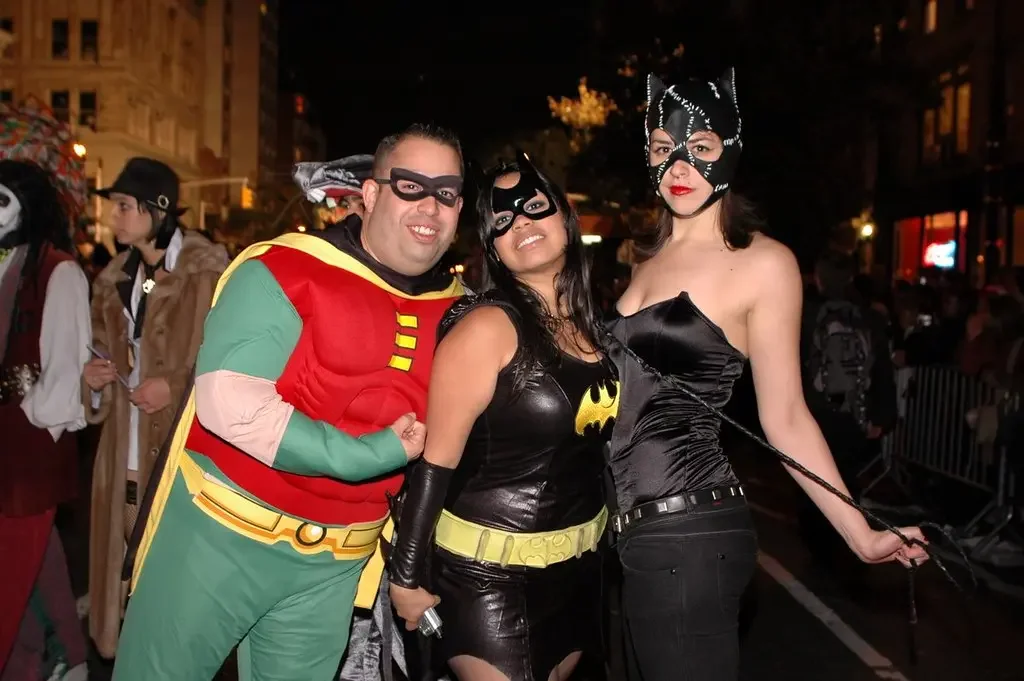
Being seen in a sexy Halloween costume is different than being truly visible separate from the male gaze. (Gene Han / Flickr)
Every October, women are told that the most revealing night of the year is also the most liberating. Halloween is when we can “take control” of our sexuality — to be witches, angels or vampires, not for men, but for ourselves. This narrative feels seductive because it promises agency in a world that rarely grants it; it insists that revealing the body can somehow undo centuries of repression.
But liberation that depends on visibility is always compromised. The idea that we can challenge the male gaze by performing within it mistakes adaptation for autonomy. The “empowering” costume doesn’t reject patriarchy’s logic; it recycles it — teaching women that to be powerful is to be desired, and to be desired is to be visible.
My first Halloween at USC taught me this lesson quickly. My friends and I dressed the “right” way — short skirts, wings and historically inaccurate corsets; it was invigorating. After years of coming into my body and beauty that was suddenly legible, I mistook attention for acceptance. Only after the initial thrill did I understand that the power I felt depended on being looked at, not necessarily being seen.
In Los Angeles, a city built on image, Halloween reconfigures visibility as currency. On the Row, bared bodies shimmer under strobe lights and camera flashes, and by morning, the night’s performances live on across social media — framed as empowerment but dictated by the same logic of desirability.
Western feminism has long conflated rebellion with reversal — assuming that exposing what was once concealed could, in itself, dismantle the logic of modesty. But modesty isn’t universal. In some cultures, it embodies grace, privacy or self-respect; in others, it becomes shorthand for repression. To assume liberation must always take the form of bareness is to flatten difference, to presume that the Western woman’s relationship to her body is everyone’s.
What’s called empowerment is often not liberation from social constraint but rather, the globalization of a Western ideal — an export of white liberal individualism, repackaged as choice. This “choice feminism” mistakes visibility for equality and individual expression for collective progress. It reframes consumption as agency, telling women that empowerment can be bought or branded, rather than built through solidarity or systemic change.
I’ll admit, there’s an undeniable pleasure to the illusion of control dressing skimpily offers: the laughter shared while dressing in group costumes, the shimmer of confidence that comes from seeing yourself reflected in a way that’s different from how you usually look — you feel beautiful and momentarily untouchable.
But pleasure is not synonymous with freedom, and if empowerment depends on appearance, it becomes performance, a choreography shaped by a culture that ties worth to desirability.
That logic extends far beyond Halloween. In our patriarchal, capitalist society, beauty becomes labor; desirability becomes currency; and empowerment becomes an advertising slogan. Capitalism is fluent in the language of feminism — selling it back to us in lace and pleather and convincing us that self-expression is inseparable from self-promotion.
As a queer woman, I’ve felt this contradiction intimately. Even as I reject the gaze that objectifies me, I still feel its persistent, inescapable pull. It shapes how I move, how I dress and how I imagine myself. The male gaze has no single owner; it lives within us, a habit of perception we’ve continuously mistaken for self-love.
bell hooks described this as a kind of psychic colonization, when patriarchal culture seeps into imagination until women begin to police themselves. In a 2017 lecture at the University of Arizona, she said, “We’ve not just been colonized in our minds; we’ve been colonized in our imaginations,” reminding us that the work of liberation begins not with exposure but with unlearning.
Even when we believe we’ve escaped the gaze, it lingers — refracted through the language of empowerment that once promised freedom. But Halloween could mean something else. Once, it was a night of transformation and disguise, a chance to blur societal constraints.
hooks often wrote about how liberation begins in the imagination, that freedom requires first envisioning ourselves outside the narratives that oppress us. To return to that spirit would mean reclaiming imagination as a site of resistance, where pleasure isn’t filtered for mass appeal. To wear something grotesque, absurd or clever is not to reject beauty but to remind ourselves that it should never be the only language of worth.
Liberation begins there, in opacity — by stepping outside the frame and pursuing joy that isn’t measured by attention. When women no longer translate confidence through desirability, Halloween might finally return to what it once promised: a night of transformation for its own sake, a brief escape from the gaze that never stops watching.
