America touched the hornet’s nest in Iran
This article was originally written for the Daily Trojan, published March 10, 2026.
Mojtaba Khamenei’s ascension and the Trump administration’s shifting war justifications expose a familiar American delusion.
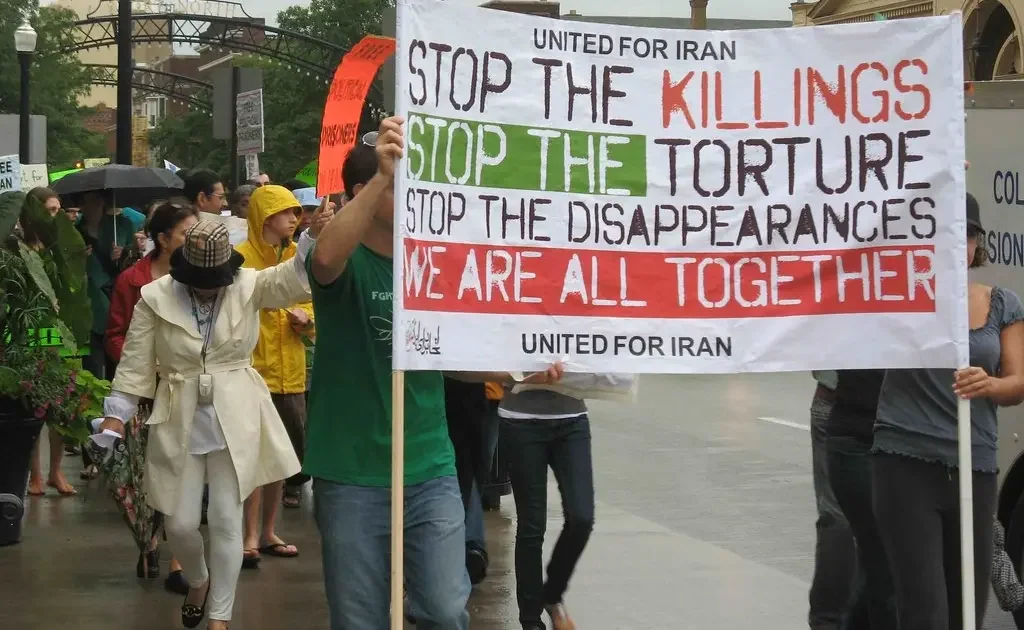
American interventionism often does not steady conflicts; it deepens them, which could be dangerous in Mojtaba Khamenei’s recent succession to become Iran’s next Supreme Leader. (Robanax / Flickr)
There is a specific kind of American confidence that only seems to emerge when we are about to deepen another country’s instability and call it intervention.
It is this confidence that claims this time will be different. This time, the strike will be “targeted”; this time, the intervention will be “limited”; and this time, we will damage the “bad” people, steady the region, preserve our moral authority and somehow avoid the realization that touching the hornet’s nest is not the same thing as controlling the swarm.
That confidence was all over the public response to President Donald Trump’s decision to join Israel in striking Iran and killing Supreme Leader Ayatollah Ali Khamenei. For a certain slice of Americans, especially on the right, the decision read as strength. Iran was an enemy. Its ruler was brutal. The strike was a way to restore deterrence, weaken Iran’s theocratic regime, crush its military capabilities and stop a larger threat before it metastasized.
Even some people wary of Trump seemed willing to entertain the fantasy that maybe, somehow, this conflict would stay neatly within the confines of a one-off show of force: no ground war, no wider regional spiral and no political aftermath the United States would have to own.
But that public tolerance was always shallower than what the White House seemed to think. A March 2 Reuters/Ipsos poll found that only 27% of Americans supported the strikes, while 43% opposed them and 29% were unsure. Republican support was far higher than Democratic support, but even there, Reuters found support softened when respondents were asked to account for American casualties or rising gas prices.
Contrary to Trump and his supporters’ beliefs, the killing of Iran’s supreme leader did not collapse the country; instead, it may have hardened its resolve.
Iran has now elevated Mojtaba Khamenei, the slain leader’s son, to supreme leader, despite Ali Khamenei reportedly opposing turning succession into a hereditary transfer of power. Rather than leaving a political vacuum, Ali Khamenei’s death appears to have accelerated a rapid succession process that kept power within the regime’s existing hard-line structure.
That detail matters because it undercuts the fantasy that killing Ali Khamenei would throw Iran into political disarray. Mojtaba Khamenei’s rise suggests the opposite: The regime’s most powerful clerical and military institutions were able to move quickly, close ranks and keep succession inside the same circle. The U.S. did not decapitate the Iranian state into collapse; it helped nurture the conditions for a faster, more defensive consolidation of power.
And what, exactly, has the Trump administration said this war is for? Americans have not been asked to evaluate one clear objective so much as a rotating menu of them. The White House called Operation Epic Fury a campaign to eliminate an “imminent nuclear threat,” with specific aims to destroy Iran’s ballistic missiles, weaken its proxy networks and dismantle its navy.
Defense Secretary Pete Hegseth called Operation Epic Fury “laser-focused,” then defined that focus broadly enough to include destroying Iranian offensive missiles, missile production, the navy, other security infrastructure and ensuring Iran “will never have nuclear weapons.” Trump, meanwhile, has framed the operation even more generally, at one point describing “freedom” for Iran as a goal of the campaign.
Taken together, these explanations do not amount to a single narrow mission but a cluster of ambitions.
If this war was about an imminent threat, Americans deserve to know what exactly was “neutralized.” If it was about nonproliferation, they deserve to know what exactly was set back and for how long. If it was about quietly destabilizing the regime, then the Trump administration owes its constituents far more honesty than it has offered. Instead, the White House has relied on enough overlapping rationales that supporters can choose whichever one sounds most defensible after the fact.
That ambiguity helps explain why support for the strike was so thin. Many Americans were not signing on to an open-ended confrontation with Iran. At most, some were willing to tolerate a strike they believed would stay limited, short in duration and cheap.
A government can sell almost any military action if it offers enough rationales for enough audiences. But when a war is justified in five different ways at once, it becomes harder to tell whether the policy is strategically flexible or simply underdefined.
The Trump administration has projected unreasonable amounts of confidence without articulating a coherent political end state. The problem here is larger than Trump, even if he embodies it especially well. America has a long habit of mistaking escalation for strategy. Other countries cannot remain passive terrain for American projections.
The Iranian state is not in free fall; it is evidently capable of preserving its governing structure under extraordinary pressure. The strike did not produce the clean rupture its defenders seemed to imagine. A regime can be evil and still emerge more entrenched after an outside attack.
That is the lesson the U.S. keeps refusing to learn. The Trump administration and its supporters wanted to believe that killing Iran’s supreme leader would project strength without dragging the U.S. deeper into yet another conflict with elastic goals and undefined limits. Mojtaba Khamenei’s succession has already exposed the flaw in that hope.
Americans should be more suspicious of this pattern now. Trump and his defenders sold the strikes on Iran as a necessary maneuver, but what it increasingly looks like is a familiar American mistake: touching the hornet’s nest, leaving the public to sort through the fallout after the fact.
