Pali Rec Center’s Old Gymnasium to be Demolished Tuesday
This article was originally written for the Palisadian-Post, published May 25, 2026.
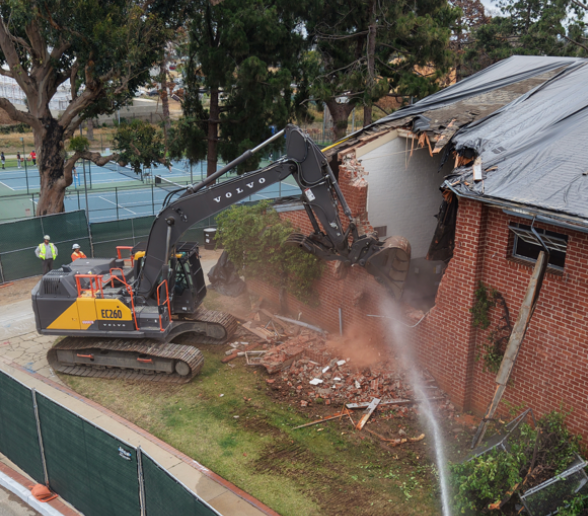
Demolition of the old gymnasium at the Palisades Recreation Center began on the morning of Tuesday, May 26. Photo by Chuck Larsen/Palisadian-Post
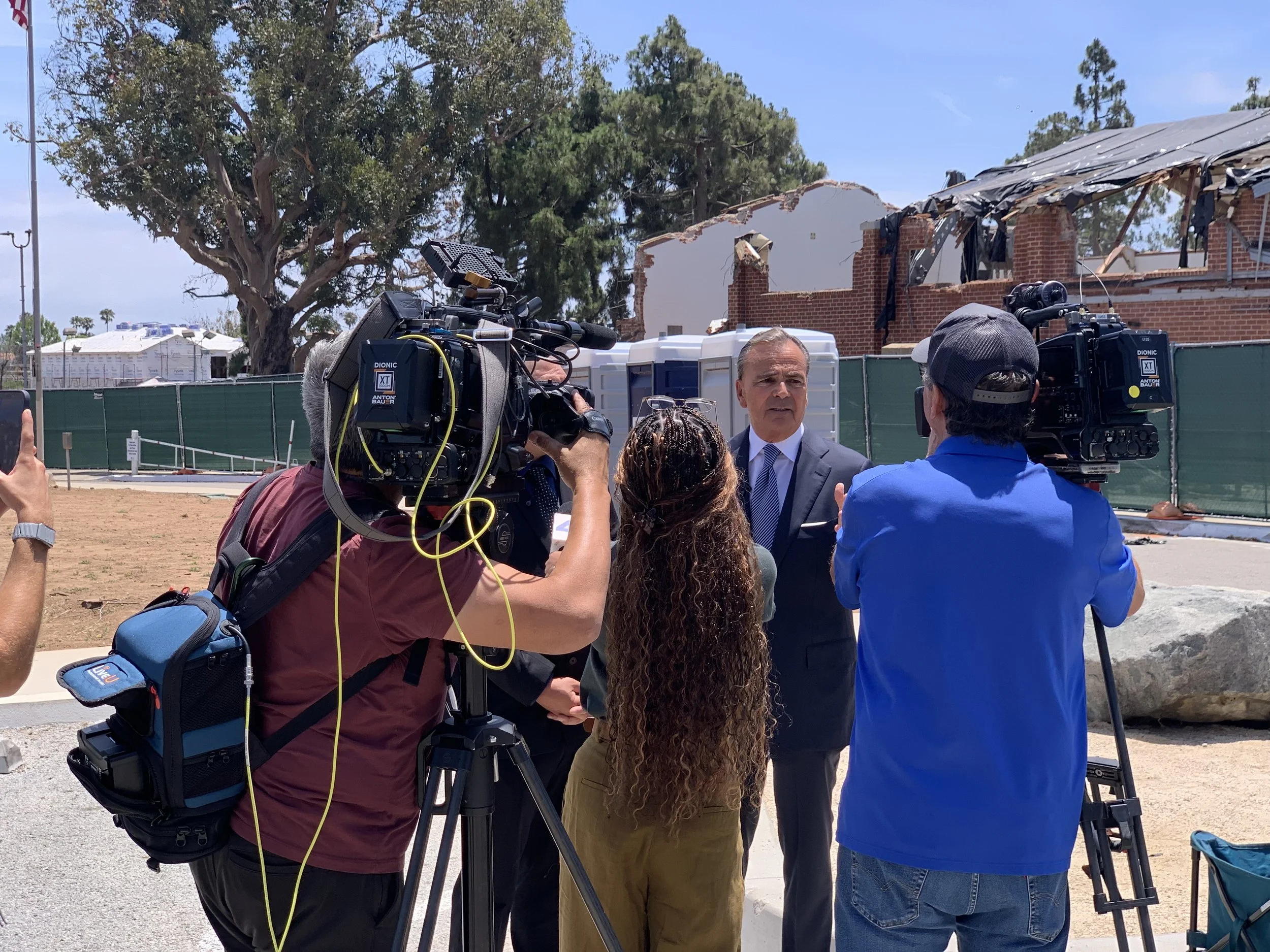
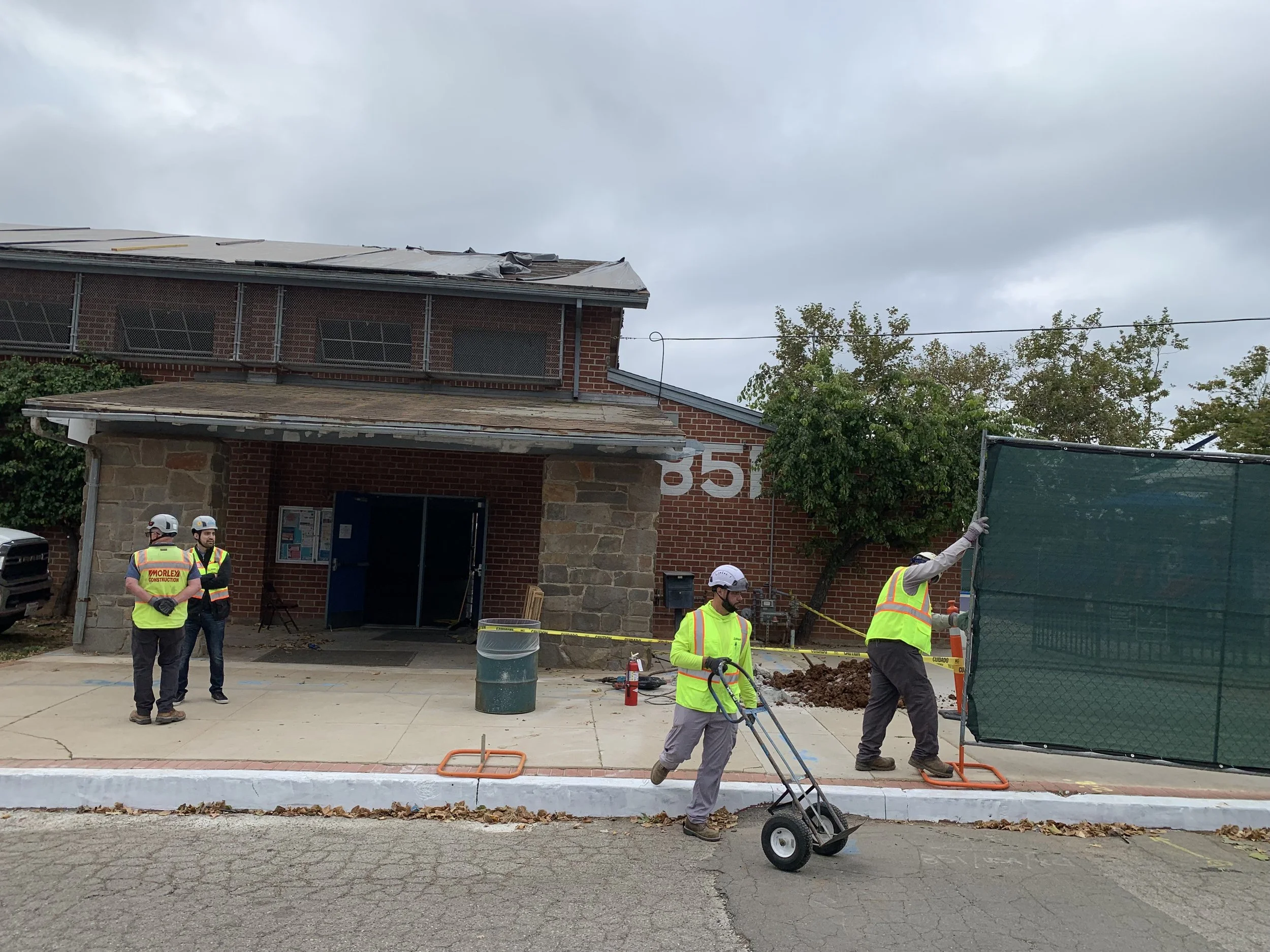
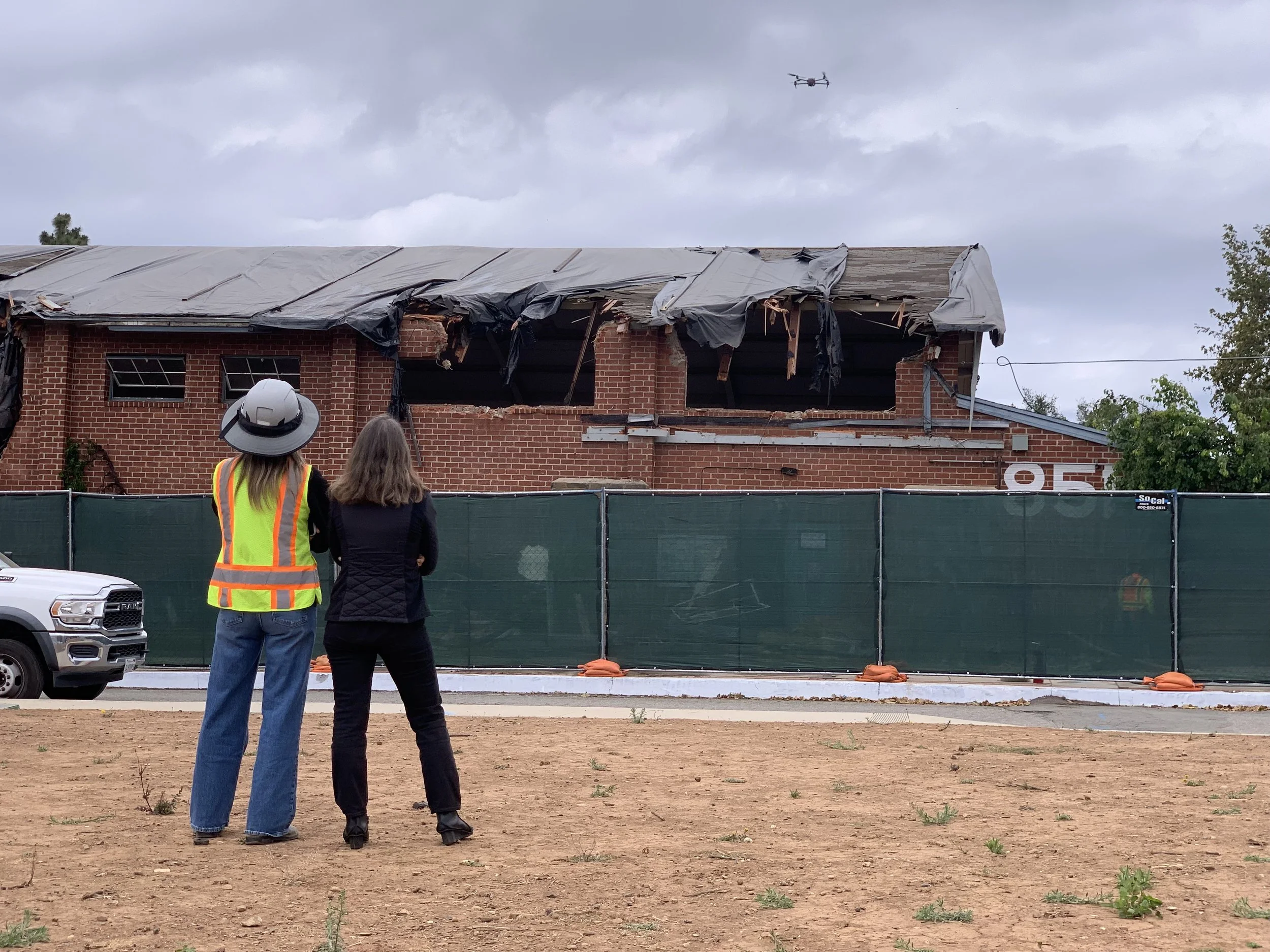
The Palisades Recreation Center’s old gymnasium—the first postwar civic building in Pacific Palisades, which opened in 1950—will be demolished on Tuesday, May 26. While other parts of the park were severely damaged in the Palisades Fire, the old gym primarily sustained damage to its roof.
The demolition will clear the way for a new recreation center designed by Gensler, a globally recognized architecture firm, and funded through a public-private partnership between the city of Los Angeles, developer Rick Caruso’s nonprofit Steadfast LA and the nonprofit LA Strong Sports, which was cofounded by L.A. Lakers Head Coach JJ Redick. The project has been reported to have a total cost of approximately $40 million.
The city’s Department of Recreation and Parks posted a notice on its website alerting community members that on Tuesday, “parts of the Palisades Recreation Center, including the gym, playground and outdoor basketball courts will be unavailable.” The notice did not mention demolition or provide a timeline for when the facilities would be accessible again. Demolition is expected to begin early Tuesday morning.
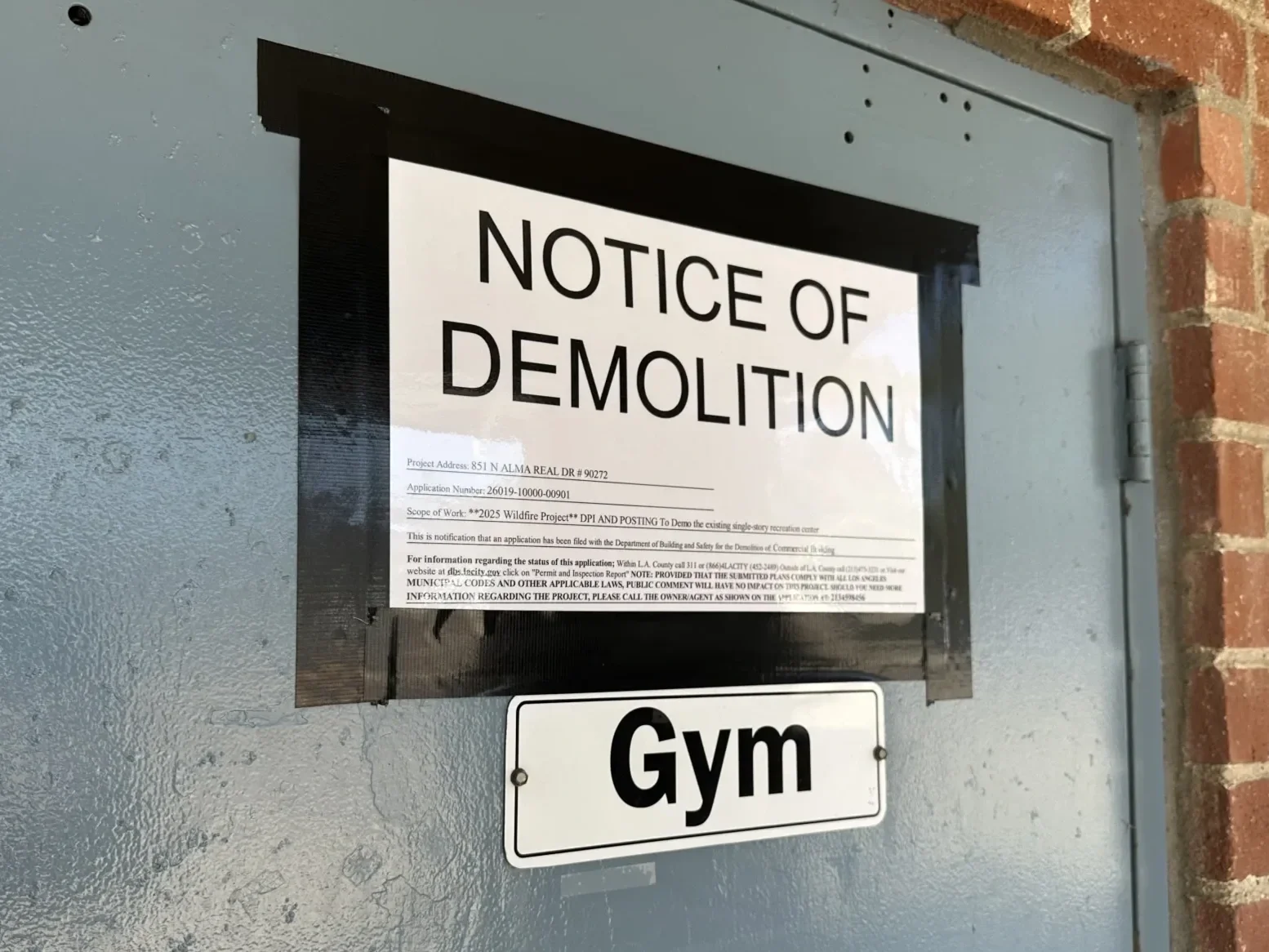
A notice of demolition posted on the door to the old gym at the Palisades Recreation Center photographed on May 6, 2026. Photo by the Palisadian-Post
The demolition has drawn criticism from the Pacific Palisades Historical Society, which had submitted paperwork to have the building recognized as a historic and cultural resource by the city of Los Angeles. Donna Vaccarino, president of the historical society, said the building is structurally sound and could have been preserved alongside a new gym rather than razed entirely.
“This is a historic building, and the problem is no one in the Palisades truly has a sense of history and understands the context in which this building was constructed,” Vaccarino said.
The building was designed by Cyril Bennett and his son, Robert Bennett, prominent Pasadena architects whose other works include the Pasadena Playhouse and contributions to the Pasadena Civic Auditorium. The Palisades Recreation Center was built as part of a postwar park bond initiative during the administration of Los Angeles Mayor Fletcher Bowron, who served from 1938 to 1953.
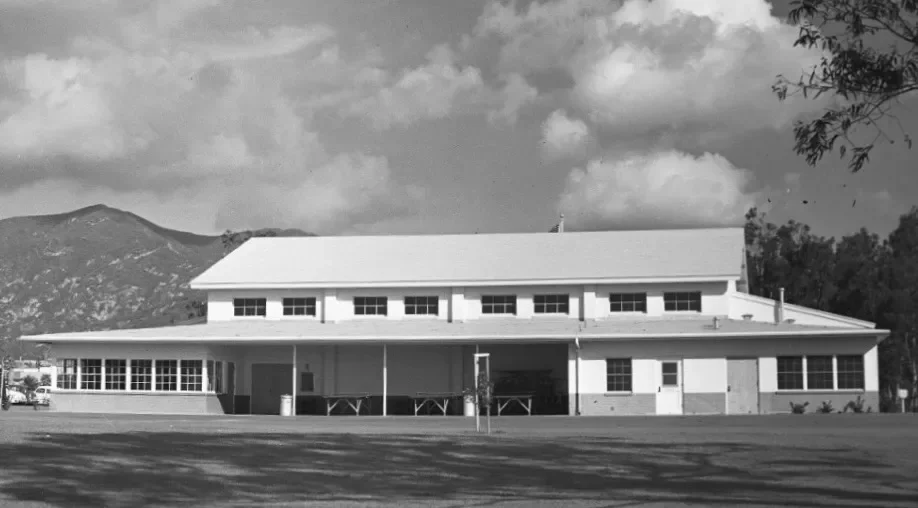
The Palisades Recreation Center, pictured shortly after its opening in 1950, was designed by Pasadena architects Cyril and Robert Bennett with construction costs funded by a bond initiative. Photo courtesy of the Pacific Palisades Historical Society
Vaccarino said the building survived the Palisades Fire with only minor roof damage and was used as a headquarters for the Department of Water and Power during the first months of recovery. She argued there is room on the 17-acre site for both the original building and a new gymnasium.
“The Historical Society is not against having a new gym,” Vaccarino said. “We think the community certainly should have a new gym, but there’s no reason to tear down the old one. There’s room for both.”
Kambiz Kamdar, a member of the Park Advisory Board, said he understands the sentiment around preserving the old gym but views the rebuild as a net positive for the community. The new building will feature a larger gym, a kitchen, accessible bathrooms and community room space for seniors, he said.
“The complete remake of the park … is going to be a big moment for the Palisades and will hopefully help people decide to come back home,” said Kamdar.
Vaccarino also raised concerns about transparency in the public-private partnership, claiming that no one in the community has seen the contract between the city and Steadfast LA or full architectural drawings of the new building. She said the historical society has filed a public records request in an attempt to obtain a copy of the contract.
“Nobody has seen what this contract is,” Vaccarino said. “How can the city give away a public park that we own, a building that was paid for by a bond—in other words, our families paid for a bond that built this building—and it’s being torn down without any review, any dialogue?”
In the past, Caruso has said the project would be privately funded and community run through a foundation model. Steadfast LA’s website describes the effort as a partnership with the city, and the organization has said community input was solicited through meetings with local groups.
An October 2025 community meeting featured Gensler’s designs for the new facility, which would replace both the fire-damaged gym—which has been cleared—and the old gym with a single, larger building that includes two full basketball courts and indoor pickleball courts, among other amenities. Caruso said at that meeting that he aimed to reopen the facility within a year of breaking ground, a timeline he described as unprecedented for a civic project involving the city.
The city’s environmental review noted that the structures at the Palisades Recreation Center were not identified as potentially historic in the Los Angeles Historic Resources Inventory. Vaccarino disputed that finding, saying that when the historical society raised the issue with city officials, they were told the building was inadvertently missed during the SurveyLA review process. SurveyLA is a historical preservation system used by the Los Angeles Department of City Planning.